
Kinesiology
Kinesiology
The Kinesiology programs at Oxnard College provide students with a strong foundation in human movement, exercise science, fitness, rehabilitation, and sport management. Across all programs, students develop practical skills, scientific knowledge, and professional experience that support careers in health, wellness, fitness, coaching, rehabilitation, and allied health professions.
Students can pursue pathways including the Kinesiology Associate in Arts for Transfer (AA-T), which prepares students for transfer to CSU programs in kinesiology and related fields; the Exercise Science Associate in Science (AS), which emphasizes the scientific study of physical activity, fitness, and human performance; the Sports, Fitness, and Recreation Management Associate in Science (AS), which prepares students for careers in the fitness, recreation, and sports industries; and the Rehabilitation Therapy Aide Certificate of Achievement (COA), which provides hands-on preparation for entry-level positions supporting rehabilitation and therapeutic services.
This is an introductory course that surveys various disciplines related to the study of human movement. Students will examine the areas of history, sociology, biomechanics, physiology, and psychology as they relate to the sport and exercise environment. In addition, students will explore career pathways involving the study of human movement, teaching, research, and professional practice.
This course involves the theory and detailed demonstration of the first aid care of the injured. The course will also introduce key issues for leading a healthy lifestyle, including heart disease risk factor identification, health and safety considerations, legal issues, and injury prevention. The student will learn to assess an individual’s condition and demonstrate proper treatment. Upon successful completion of requirements, students would be eligible for first aid, CPR and AED for adult, child, and infant certification.
Dive into the dynamic field of sports management with this comprehensive introductory course. Explore a wide range of career opportunities in the sports industry and gain a solid understanding of key areas including: Human Resources Management, Leadership, Strategic Planning, Teamwork, Ethics and Values, Marketing and Advertising, Finance, Facility Management, Sports and the Law, Economics of Sport, and Community Impact.
This course is designed to improve physical fitness by promoting the five components of fitness: flexibility, cardiovascular fitness, muscle strength, muscle endurance, and body composition. Individual health and fitness assessments will be conducted during the semester. Nutritional awareness and wellness techniques will be included.
This physical education course uses kickboxing and conditioning techniques for losing weight, toning muscles and developing cardiorespiratory fitness. Kicking shields and focus mitts are used for training.
Kickboxing offers students a workout that focuses on building cardiorespiratory endurance and fitness through its more advanced curriculum. Body conditioning and weight loss are emphasized. Training equipment including focus mitts and kicking shields are used in class.
This course is designed to develop cardiorespiratory conditioning and fitness through the use of boxing techniques. The course also focuses on building muscle endurance, strength and weight management.
This course is designed to increase cardiorespiratory conditioning and fitness through the use of intermediate boxing techniques. Students will learn punching combinations along with defensive maneuvers such as bobbing and weaving, slipping and parrying punches. Students will be taught how to increase muscle strength, endurance and tone while also lowering and managing body weight. Proper use of training equipment will be demonstrated.
This activity course addresses issues of physical assault and self-defense. Students will learn basic self-defense skills that increase their chances of surviving an assault situation. The psychological and mental aspects of self-defense will also be explored.
Escrima is an ancient martial art system which evolved in the Philippines around the 9th century during the T’ang dynasty. It was outlawed during the Spanish conquest in the 16th century, yet preserved by the Filipinos who hid the art in dance. Escrima employs empty-hand techniques as well as traditional weapons. The course will focus on the artistic aspect of the art as well as its application in contemporary self-defense situations.
Escrima is an ancient martial art system which evolved in the Philippines around the 9th century during the T’ang dynasty. It was outlawed during the Spanish conquest in the 16th century, yet preserved by the Filipinos who hid the art in dance. Escrima employs empty-hand techniques as well as traditional weapons. The course will focus on the artistic aspect of the art as well as its intermediate application in contemporary self-defense situations.
The art of jujitsu was historically used by the Samurai warrior class in Japan to defend themselves against the enemy. It continues to be practiced today and has gained great popularity due to mixed martial arts. Jujitsu is a well-rounded martial art that prepares students to respond to a physical assault. Students will learn how to break fall and roll, kick, punch, and defend themselves against an assailant. The application of joint locks, nerve manipulation, chokes, throws, and control tactics will also be taught. This course will also introduce students to basic grappling techniques.
The art of jujitsu was historically used by the Samurai warrior class in Japan to defend themselves against the enemy. It continues to be practiced today and has gained great popularity due to mixed martial arts. Jujitsu is a well-rounded martial art that prepares students to respond to a physical assault. Students will learn how to break fall and roll, kick, punch, and defend themselves against an assailant. The application of joint locks, nerve manipulation, chokes, throws, and control tactics will also be taught. This course will also introduce students to basic grappling techniques.
This course is designed to provide exercise and fitness training for the walking student population. The course emphasizes cardiovascular conditioning, muscle strength, and endurance related specifically to walking. It is designed to encourage students to participate in and achieve a more strenuous physical activity program.
This course is designed to provide exercise and fitness training for the moderate to active jogging or running student population. Emphasis is on cardiovascular conditioning and muscle strength, and endurance related specifically to jogging and running. It is designed for students to participate in and achieve a more strenuous physical activity program.
This course introduces yoga techniques for beginners. Students will learn basic yoga positions and exercises, breath control, relaxation techniques, and stretching postures.
Students will build on their knowledge and skills learned in Yoga I. Level II poses, asanas, flow combinations will be performed. Physiological and psychological benefits of Yoga will be discussed as well as integrating mind, body and spirit.
This course introduces the study and practice of Pilates, a conditioning program based on the teachings of Joseph H. Pilates. It emphasizes activities designed to reduce muscular imbalances and improve body alignment by incorporating strength, flexibility, and relaxation techniques. The focus of this course is on postural symmetry, breath control, abdominal and core strength, and joint mobility and stabilization.
This course introduces a wide variety of concepts and physical conditioning techniques focusing on core musculature, balance, coordination, and flexibility. It includes movement skills using stability balls, functional integrated resistance exercises, basic yoga, Pilates, and other movement forms that elicit intrinsic and extrinsic core muscle conditioning, improved balance, and flexibility. Benefits of this course include enhanced posture, back comfort, body awareness, and muscular condition. Activities in this course are adapted to varied levels of ability and fitness.
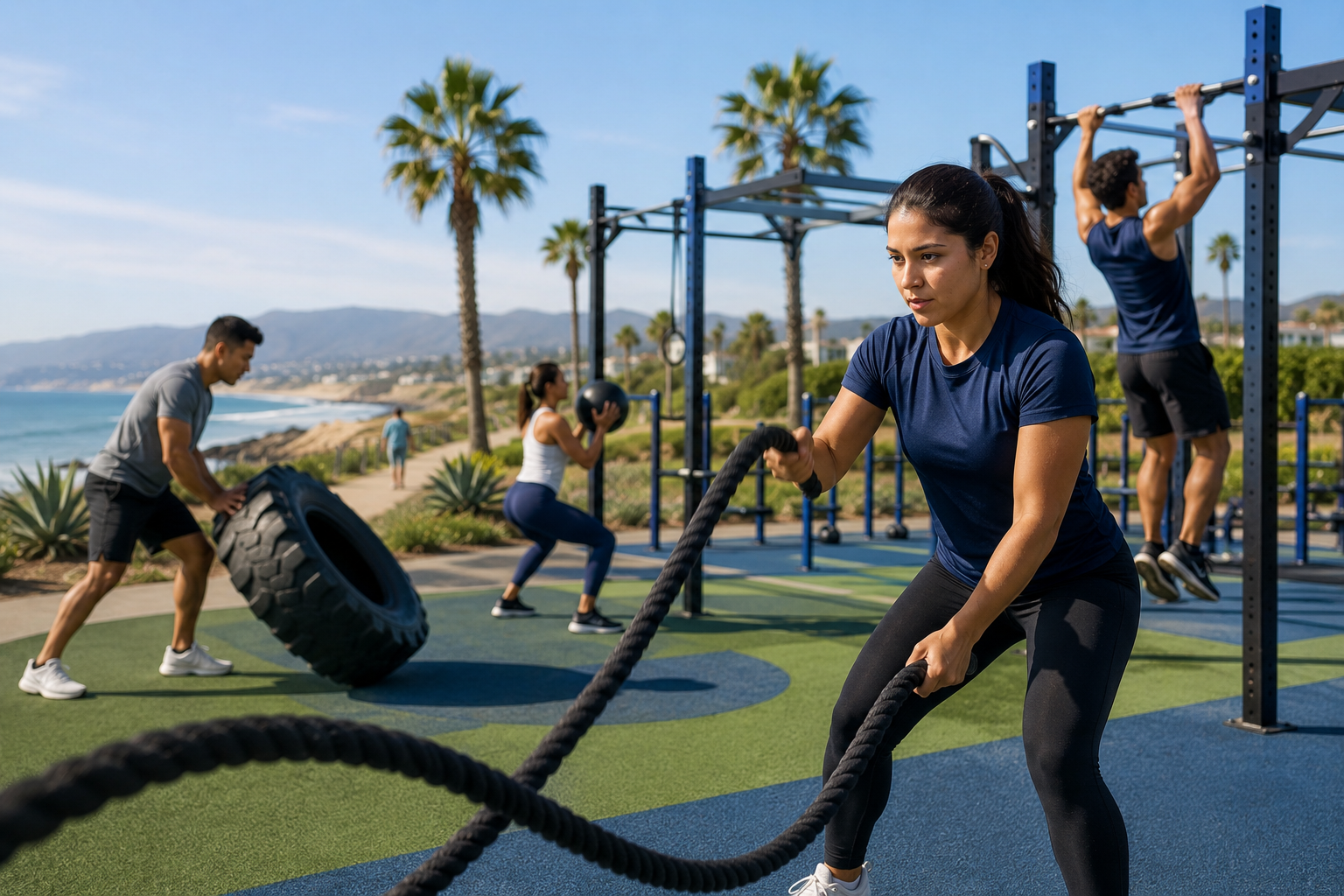
This course introduces boot camp-style methods for total body conditioning designed to improve cardiovascular and muscle endurance, muscular strength, agility, and flexibility. It provides a wide-range of fitness activities with interval training. It also includes both indoor and outdoor fast-paced activities over a variety of terrain, and emphasizes functionality that can enhance performance in everyday activities or sports which allows activities to be adapted to varied levels of ability and fitness.
This course is a total body conditioning group workout designed to improve cardiovascular fitness, muscle strength and muscular endurance. The class incorporates the use of a variety of resistance training systems and equipment to enhance agility, flexibility, balance training and body composition management. It may include both indoor and outdoor terrain and emphasizes functionality that can enhance performance in everyday activities and sports while encouraging lifelong physical fitness.
This course emphasizes developing fundamental fitness skills, coordination, muscular tone, and strength through the use of weight machines and free weights. It also highlights the importance of cardiovascular conditioning and provides instruction in basic nutrition principles.
This course builds on the goals established in Weight Training and Conditioning I to advance student performance in cardiovascular conditioning, power lifting, weight management, and endurance development. Students will train using bodyweight exercises, kettlebells, medicine balls, and resistance bands while learning to plan and execute an integrated cardio–strength training program. Instruction emphasizes the application of progressive overload to design and modify cardiovascular endurance routines and to develop a balanced muscular strength training program. The course also covers key nutrition concepts and their application to meal planning for pre-workout, post-workout, and performance enhancement.
This course is designed to improve women's general physical condition in relation to cardiovascular endurance, flexibility, strength and general body toning. The course will include analysis of proper nutrition, weight control, stress reduction and cardiovascular efficiency. In learning how to establish a personal fitness program, students will examine a variety of exercise techniques and their effects on the body. Fitness assessments, nutritional guidelines and accurate heart rate monitoring will be essential to this course.
This course is an advanced exploration of body conditioning to improve women's cardiovascular endurance, flexibility, strength and muscular endurance.
This course builds strength, power and bulk using exercises which center on the development of core strength and multi-joint power lifts. Through the implementation of competitive drills and routines, the development of agility, quickness, coordination, balance and speed in the conditioning phase are emphasized.
This course provides students with the opportunity to gain muscular strength and cardiovascular endurance through stationary cycling. The workouts are performed on a studio spinning bike designed to improve aerobic and anaerobic fitness through interval training and steady state training. Benefits include improved cycling mechanics and efficiency, body awareness, injury prevention, stress reduction and increased self-confidence.
This is a course in beginning soccer with emphasis on cardiovascular conditioning, techniques, rules and strategies of the team game. It is designed for students to increase their knowledge, skills, and techniques of the sport of soccer.
This is a course in advanced soccer with emphasis on cardiovascular conditioning, techniques, rules and strategies of the team game. It is designed for students to increase their knowledge, skills, and techniques of the sport of soccer.
This is a course in beginning basketball with emphasis on cardiovascular conditioning, techniques, rules and strategies of full court game. It is an activity course designed for students to increase their knowledge, skills, and techniques of the sport of basketball.
This course is designed for intermediate to advanced basketball players and emphasizes cardiovascular conditioning, skill refinement, and the application of rules and advanced strategies for full-court play. Through structured drills, competitive play, and tactical instruction, students will enhance their technical proficiency, game awareness, and overall performance. The course focuses on expanding players’ knowledge of the sport while developing higher-level skills and techniques essential for competitive basketball.
This is a course in beginning baseball with emphasis on cardiovascular conditioning, techniques, rules and strategies of the team game. It is an activity course designed for students to increase their knowledge, skills, and techniques of the sport of baseball.
This is a course in advanced baseball with emphasis on specific baseball conditioning, intricate baseball skills, rules and strategies of the team game. It is an activity course designed for students to increase their knowledge, skills, and techniques of the sport of baseball.
This course teaches the basic skills of playing volleyball. Techniques, strategy and rules of the game are covered. Conditioning and fitness development are also emphasized, as well as nutrition guidelines for volleyball participants.
This course teaches advanced skills for playing volleyball. Techniques, strategy and rules of the game are covered. Conditioning and fitness development are also emphasized, as well as nutrition guidelines for volleyball participants.
This course offers instruction and practice in the fundamentals of flag football techniques and team play in a recreational environment. The course builds upon the application of motor skills and introduces the student to the rules, etiquette, and strategies for the game of flag football. Athletic skills, sportsmanship, and teamwork will be emphasized.
This course provides comprehensive instruction and practice in the advanced techniques and strategies of flag football in a recreational environment. This course expands on the foundational skills acquired in the introductory course, delving deeper into the intricacies of the game. It further develops motor skills, introduces complex offensive and defensive strategies, and emphasizes the importance of sportsmanship and teamwork. The course also encourages students to apply critical thinking to devise effective game plans. Mastery of intermediate athletic skills, leadership, and team dynamics are the primary focus of this course.
This course is designed for selected students interested in furthering their knowledge of kinesiology on an independent study basis; assigned problems will involve library, lab, and field work.
This comprehensive introduction to Rehabilitative Therapy Aide course prepares students for the growing field of therapeutic practices. This course is designed to give students the knowledge and understanding necessary for gaining employment as a Rehabilitative Aide in environments such as hospitals, nursing homes, private practices, rehabilitation centers, and sports medicine clinics. Students learn how to prepare treatment areas, transport patients, and complete administrative tasks.
This course covers the fundamentals of human movement, anatomy, the practical applications of muscle function, cardio-respiratory testing and functions, principles of exercise, training techniques, energy metabolism, and the effect of environmental conditions on exercise.
Students learn applied Kinesiology and anatomy by examining the anatomical structure and function of the musculoskeletal system as it relates to human movement and exercise. Muscular analysis and practical application, including strengthening and flexibility exercises for each muscle will be emphasized. Students will also study physiological and biomechanical principles.
This course provides an overview of basic concepts and principles essential to understanding the psychological and behavioral aspects of fitness and sport. Topics include motivation, anxiety, observational learning, imagery, exercise adherence, goal setting, and youth sport participation. Applications are made to future practitioners of coaching, teaching, sports medicine, counseling, sport management, and fitness instruction.
This course provides students with a foundation of skills and knowledge to begin a successful coaching career. Emphasis is placed on ethics, team management, team practice organization, and positive coaching characteristics and philosophies. The course addresses coaching issues for all levels and age groups.
This course explores the historical, cultural, physiological, and social dimensions of women’s participation in sports and fitness. Students will examine the evolution of women’s roles in athletics, the impact of gender equity legislation (such as Title IX), media representation, and the intersectionality of gender, race, and culture in sports. Emphasis is placed on women’s contributions to sport, barriers to participation, leadership in fitness and athletics, and current trends in women’s health and exercise science.
This course introduces the fundamental principles, responsibilities, and professional standards of sports officiating. Students will learn officiating mechanics, rules interpretation, communication skills, and ethical decision-making across a variety of sports. Emphasis is placed on developing confidence, fairness, and professionalism while managing competition settings.
This course examines sport and fitness as social institutions and cultural practices. Students explore how participation, representation, and access are shaped by factors such as class, gender, race, sexuality, and globalization. Major sociological perspectives, including functionalist, conflict, interactionist, and feminist theories, are applied to topics such as socialization, identity, media influence, commercialization, and ethics in sport. Emphasis is placed on the role of sport and fitness in education, politics, and social change.
Division
Public Safety Training Programs, Athletics, Health, and Kinesiology
Phone: (805) 289-6336
Full-time Faculty
Dianne Habring Frehlich, Ed.D., M.S.
Email: dfrehlich@vcccd.edu
Phone: (805) 678-5188
Office: Physical Education Building 113B
Dr. Dianne Habring Frehlich is professor and department chair of Kinesiology and Health Education at Oxnard College. She holds an Ed.D. in Kinesiology from University of North Carolina at Greensboro with a focus on physical activity and mental health, and an M.S. in Kinesiology with an emphasis in Exercise Physiology from California State University, Northridge, where she studied the impact of physical activity on bone mineral density. Her teaching and program development work emphasizes public health, exercise science, health education, and workforce pathways that prepare students for careers in health, fitness, rehabilitation, and wellness.
Lawrence "Ron" McClurkin, Ed.D., Head Coach
Email: rmcclurkin@vcccd.edu
Phone: (805) 678-5093
Office: Physical Education Building 116B
Dr. Ron McClurkin is a professor in Kinesiology and Health Education at Oxnard College and head coach of the men’s and women’s basketball programs. He holds an Ed.D. from the University of La Verne and is committed to student success through teaching, coaching, and community outreach, including involvement with Coaches vs. Cancer. His classes emphasize the practical application of health concepts, mental health awareness, health disparities, wellness, and the positive impact of physical activity on individuals and communities.
Erin Marquez-Lawley, M.A.
Email: elawley@vcccd.edu
Phone: (805) 678-5247
Office: LLRC 114
Erin Marquez-Lawley is a professor in Kinesiology and Health Education at Oxnard College. She holds an M.A. in Coaching and Athletic Administration from Concordia University Irvine and teaching credentials in Health Science and Physical Education from Sonoma State University. Her background includes eight years teaching high school health and physical education, as well as coaching high school, travel, and NCAA Division II softball. Her work emphasizes student wellness, inclusive education, leadership development, and supporting diverse student populations, with a particular passion for LGBTQIA+ and Rising Scholars students.